
Arthshastra Dispatch - The Digital Silk Road Underwater: US–China’s Subsea Cable War
Oct 3, 2025

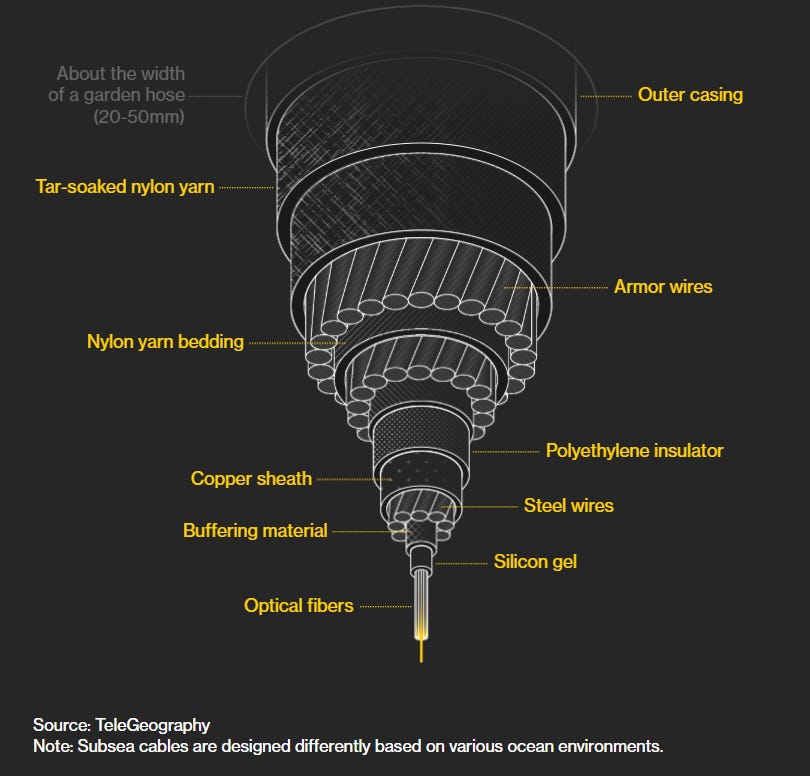
The world’s digital nervous system doesn’t run on satellites — it runs through the oceans. Nearly 99% of international internet traffic flows through submarine cables no wider than a garden hose. They carry not just WhatsApp calls and Netflix streams, but AI queries, military communications, and $10 trillion in daily financial transactions.
What began in the 1850s as copper telegraph lines across the English Channel has today become a $15.4 billion infrastructure race — one that defines global power. And at the center lies a growing fault line: the US–China contest for control of these cables.
The Mechanics of Control
1. Taiwan as Flashpoint
Each year, Taiwan reports 7–8 cable cuts, many traced to Chinese vessels.
Example: Cargo ship Hong Tai 58 (2023) dragged its anchor across seabed cables for two days, severing connections to Taiwan’s islands.
Beijing insists these are accidents. Taipei calls them coercion. Either way, it highlights “grey zone operations” — hostile acts short of open war.
2. Rival Cables, Rival Empires
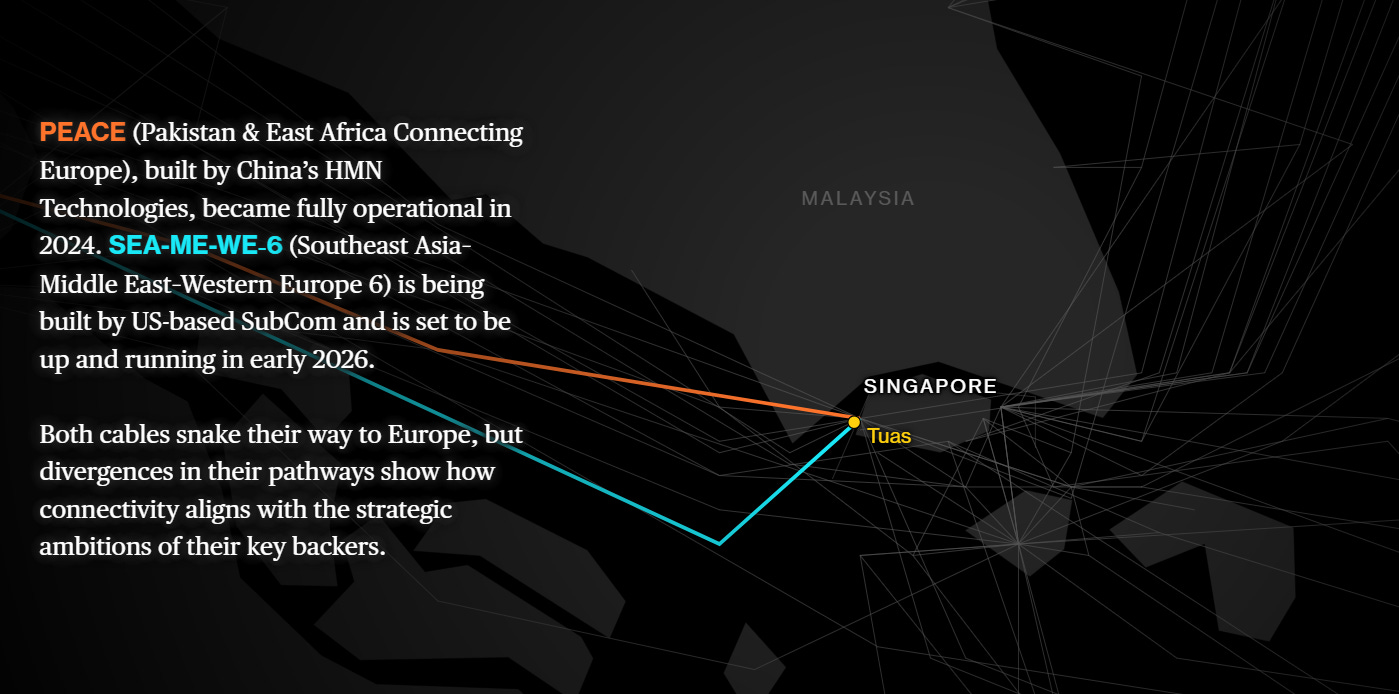
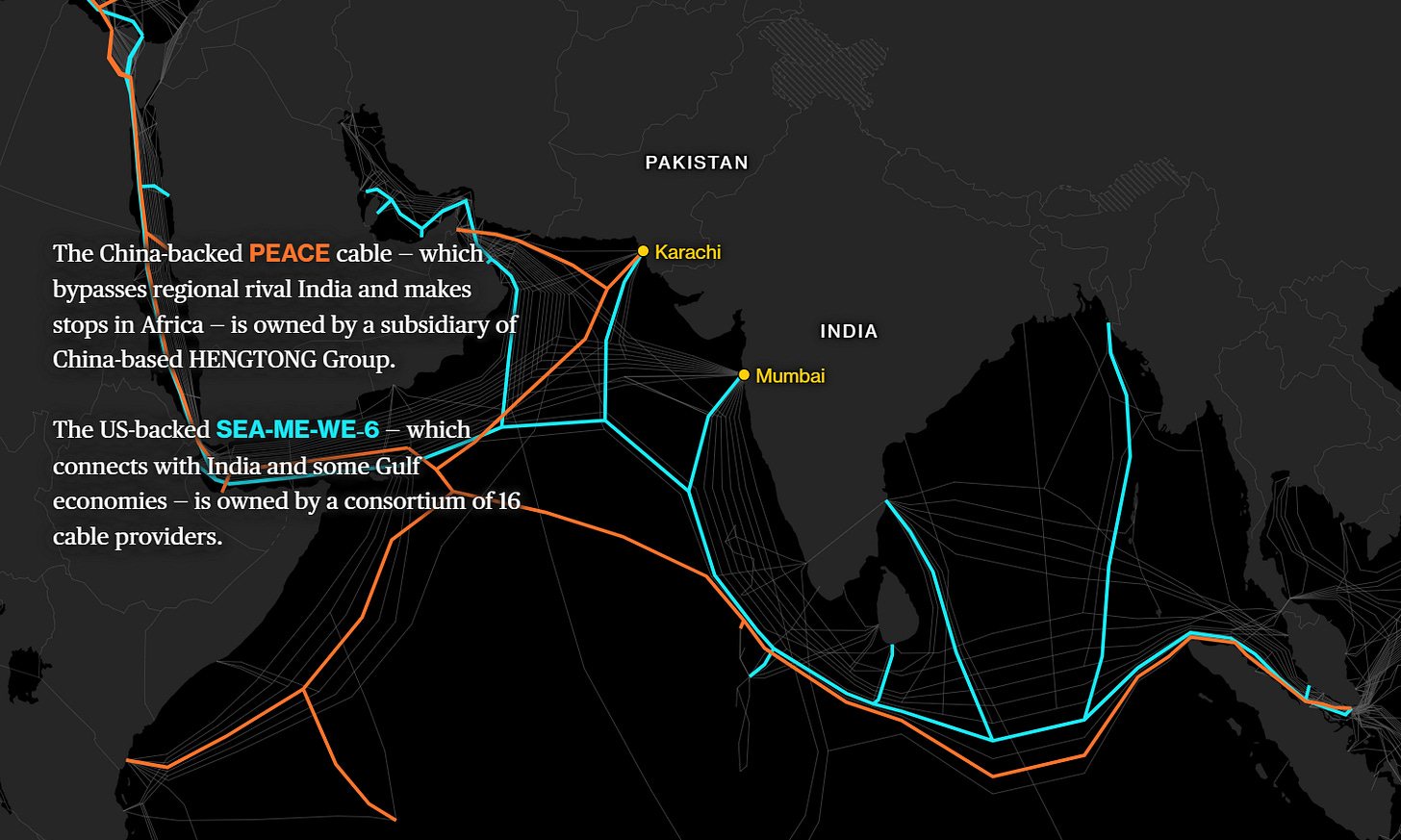
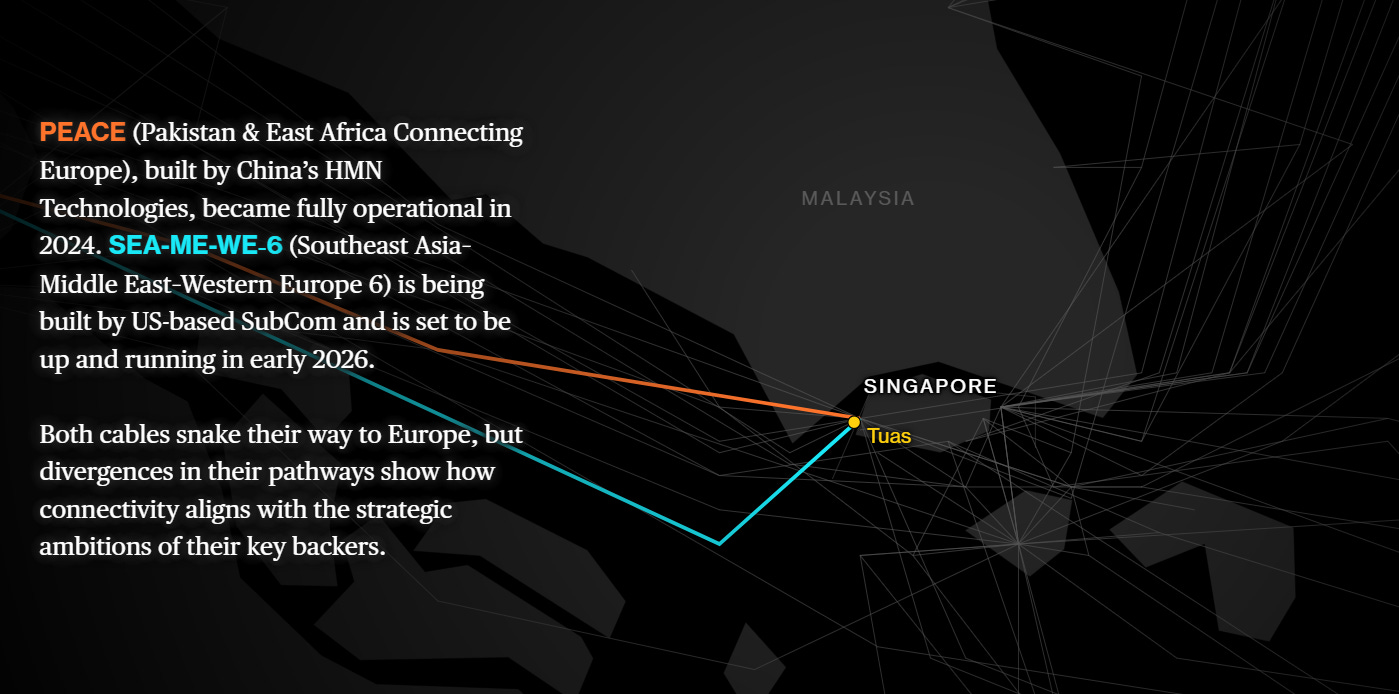
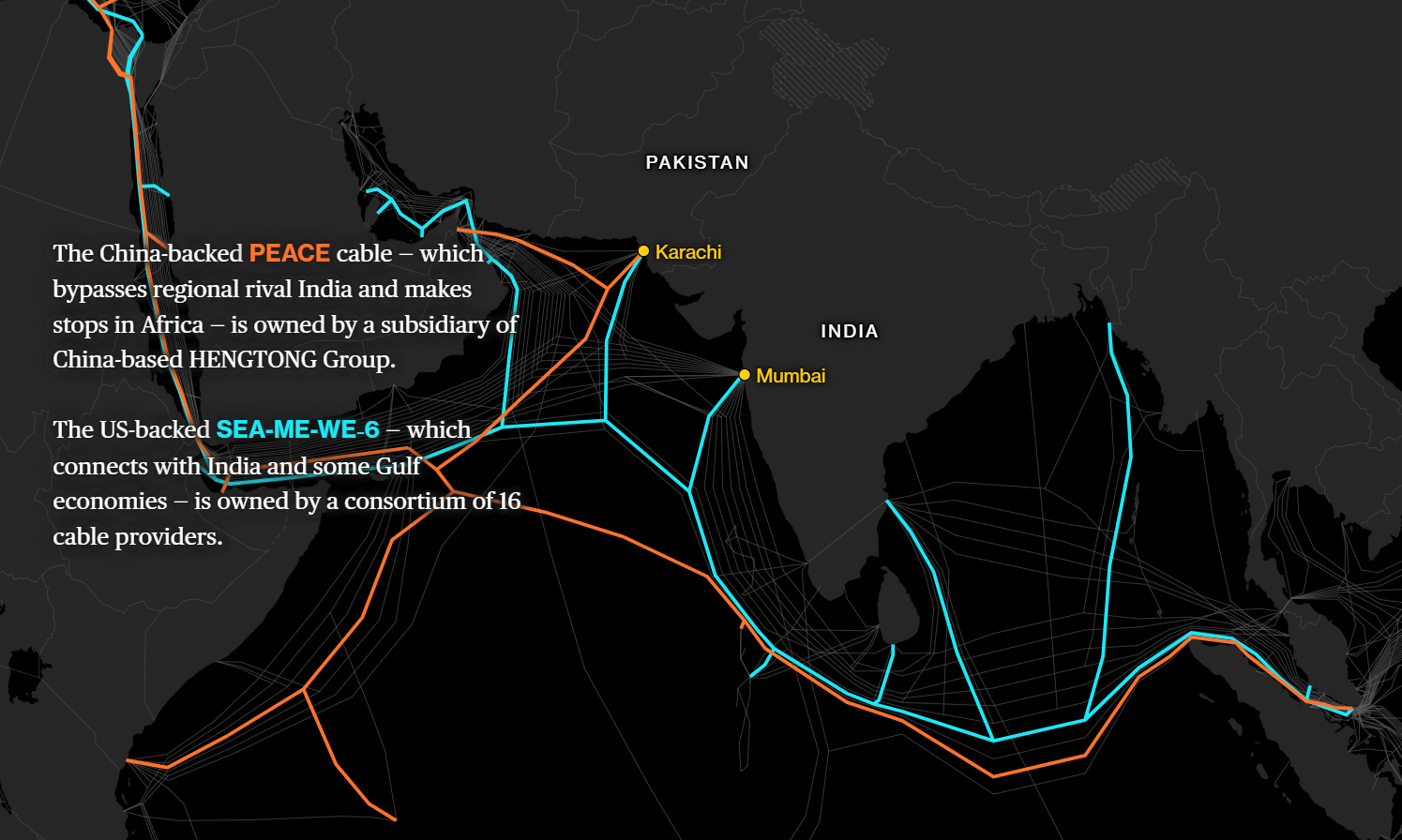
China’s PEACE cable (Pakistan & East Africa Connecting Europe) → operational 2024, bypasses India, runs through Karachi and Africa. Owned by Hengtong (state-linked).
US-led SEA-ME-WE-6 → operational 2026, connects Singapore → India → Gulf → Europe. Built by SubCom with 16-company consortium.
Both snake toward Europe, but routes reveal geopolitics: China avoids rivals; US reinforces allies.
3. Big Tech as the New Superpowers
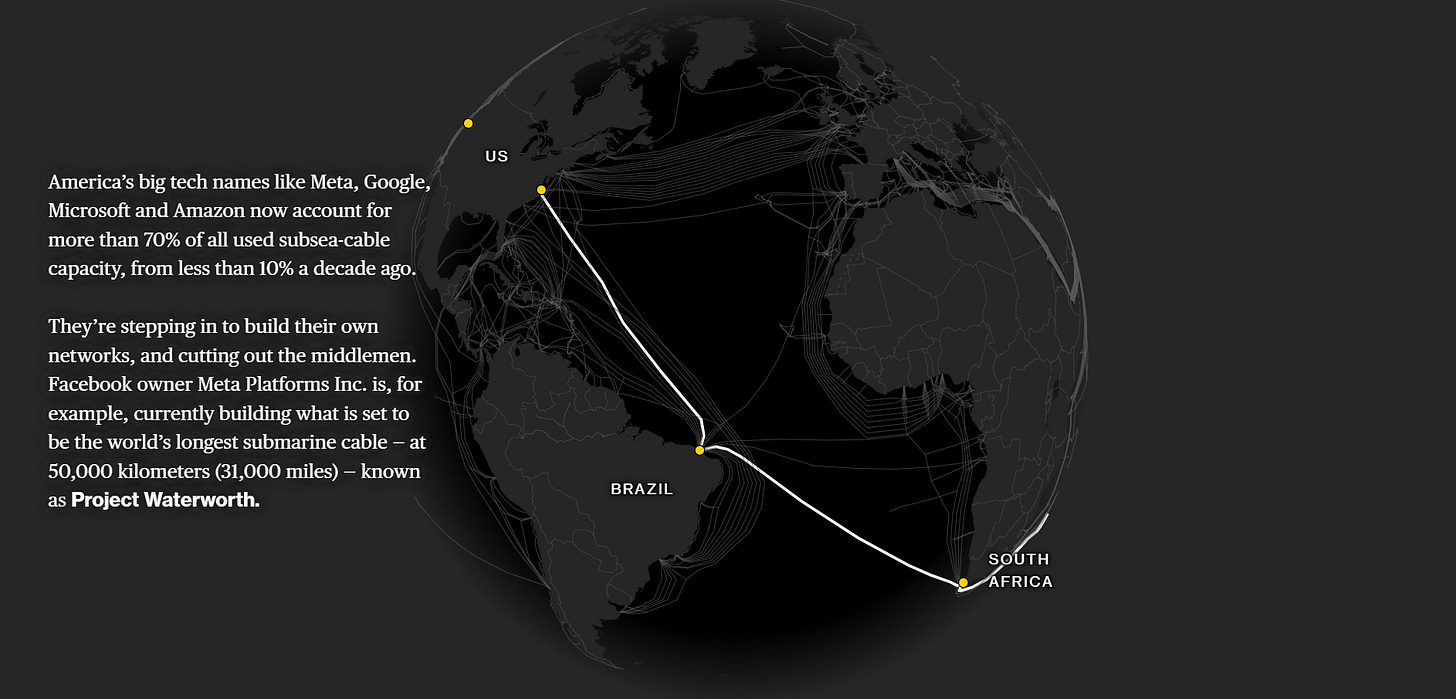
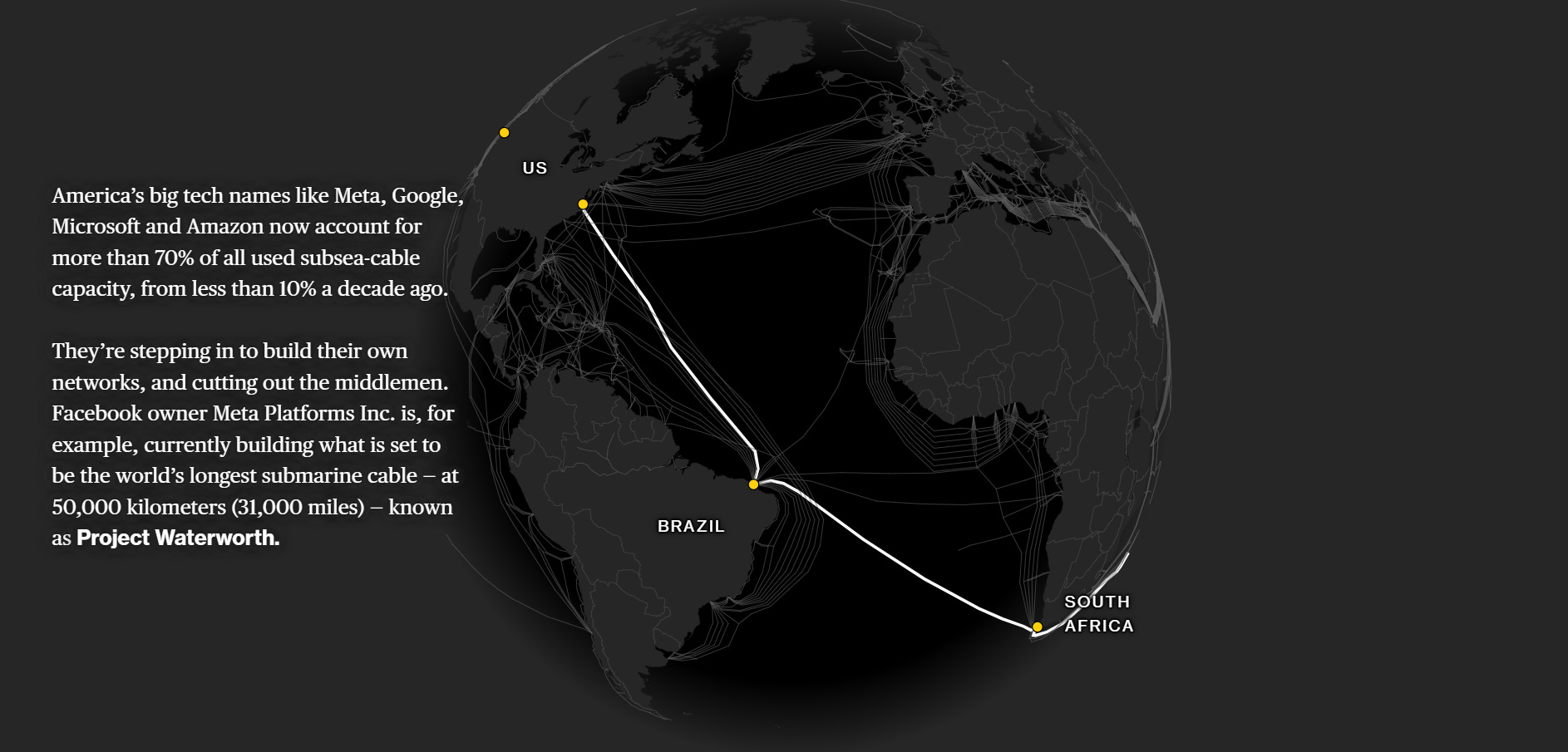
Ten years ago, telecoms dominated subsea cables. Today, Google, Meta, Amazon, Microsoft own 70%+ of global capacity.
Meta’s Project Waterworth: 50,000 km subsea cable (US–Brazil–South Africa–Europe), the longest in history.
For Big Tech, owning cables secures guaranteed bandwidth for cloud, AI training, and global scale computing.
4. Weaponization of Pricing
China’s HMN Technologies builds cables 20–30% cheaper than rivals, with soft loans.
This wins over countries like Pakistan, Djibouti, and parts of Africa.
The US counters with subsidies, training grants, and bans on Chinese equipment in Western-linked cables.
Outcome: A digital decoupling — no shared consortia, separate empires.
5. The Economics of Chokepoints
Global spend: $900M (2023) → $15.4B (2028).
Wherever cables land, data centers follow — creating hubs like Singapore, Mumbai, Marseille, Mombasa.
Control of landings = control of data gravity.
Just as ports determined maritime empires, cable landings will define digital empires.
The Vulnerabilities
Grey Zones & Sabotage
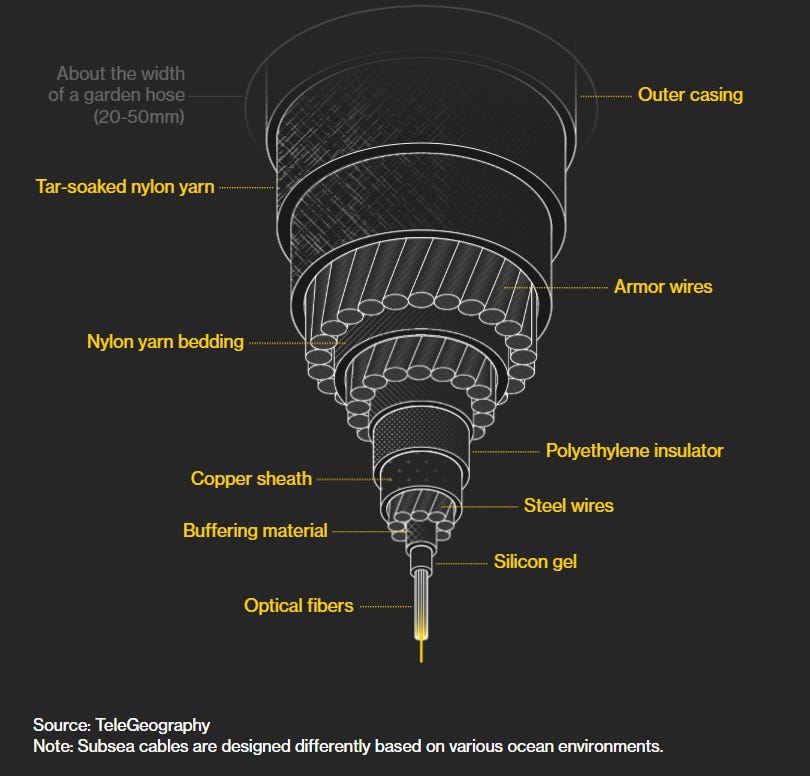
Cables are only 20–50 mm wide, easy to cut with anchors or submersibles.
Over 200 breaks per year occur globally — mostly accidents, but increasingly suspected sabotage.
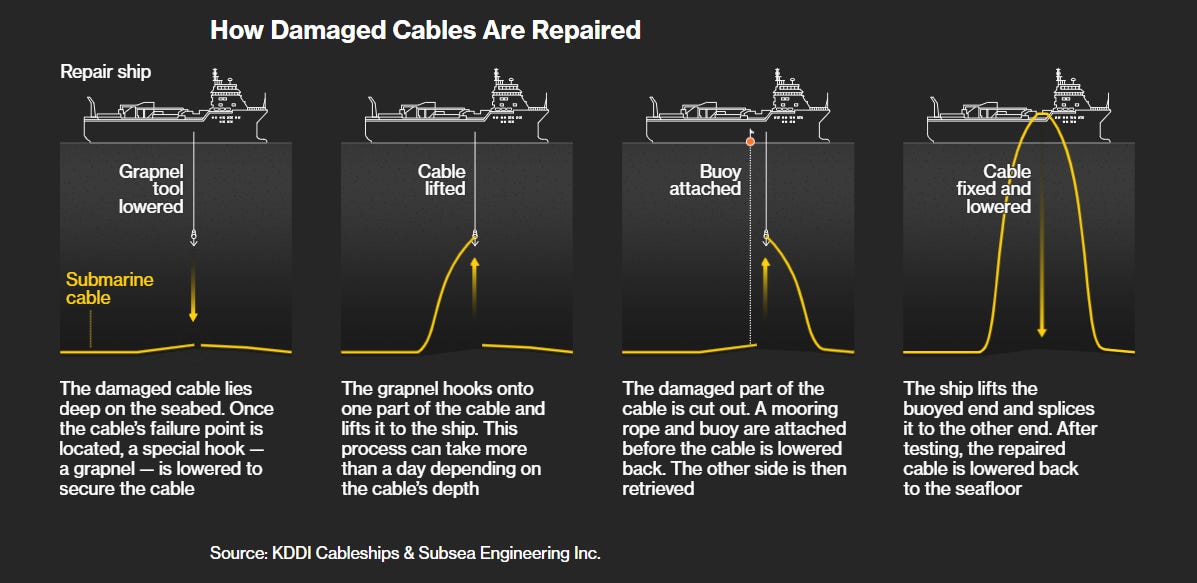
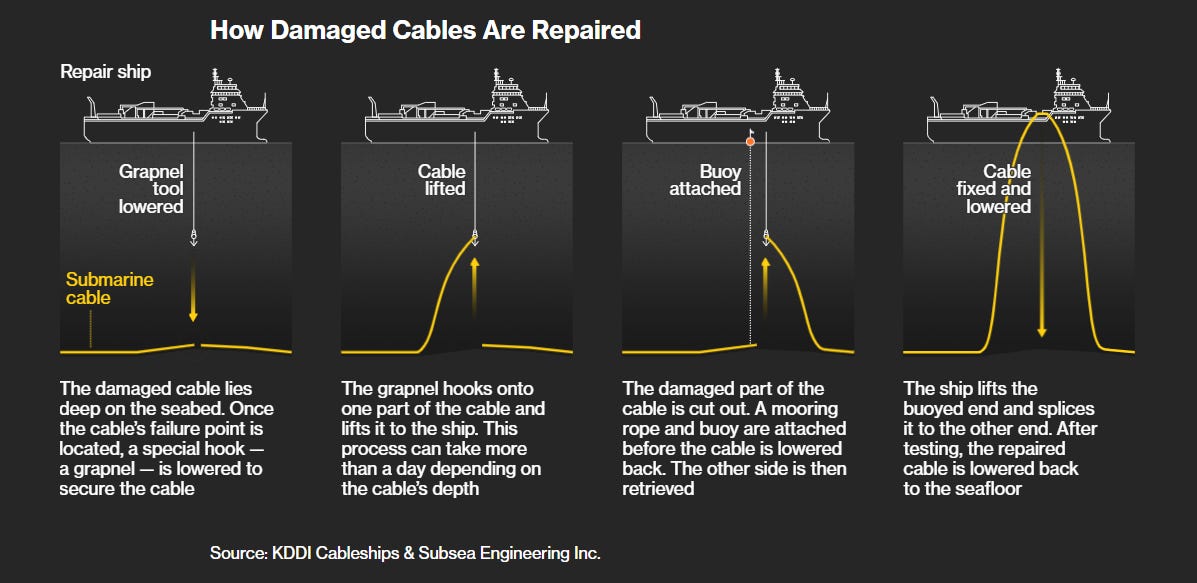
Repair takes weeks, costs millions, and exposes entire economies to blackout.
Global Pattern of Threats
2024: Russian ship severed five cables in Gulf of Finland (€60M damage).
2023: Russian officials hinted at destroying enemy cables after Nord Stream pipeline blast.
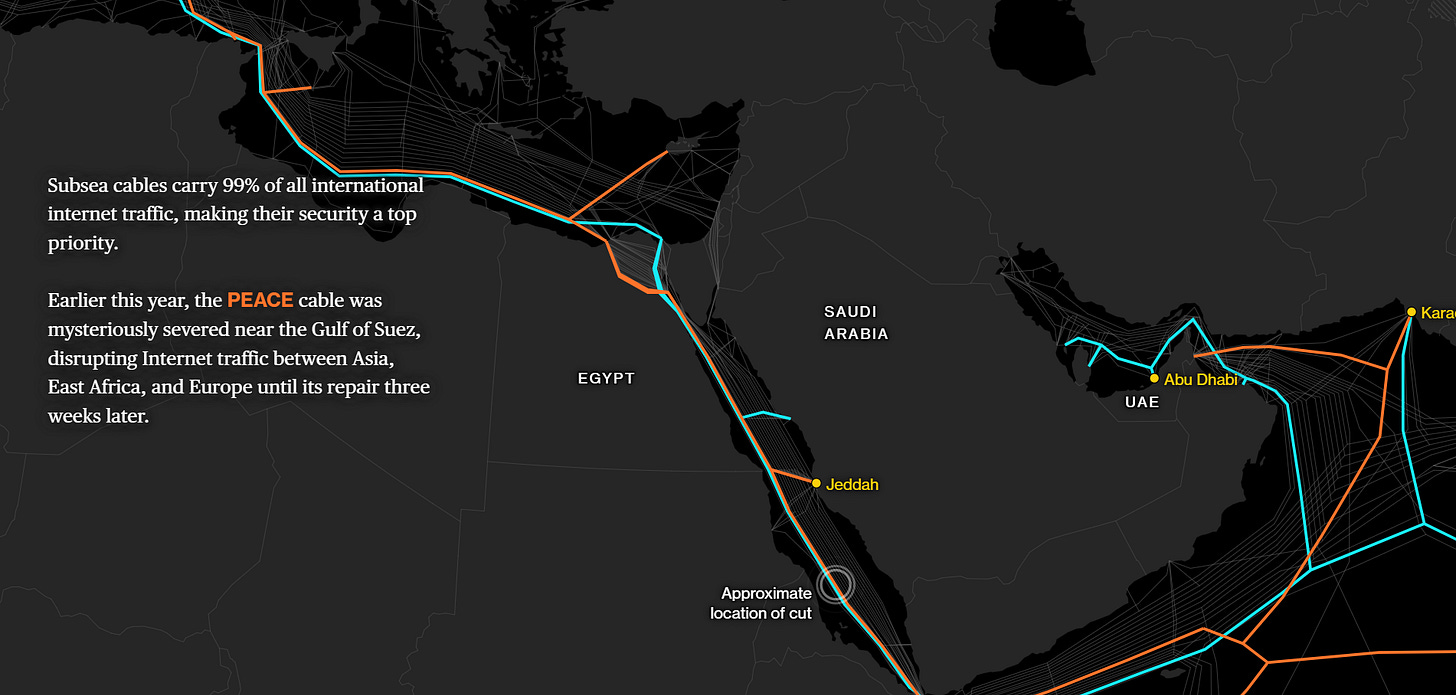
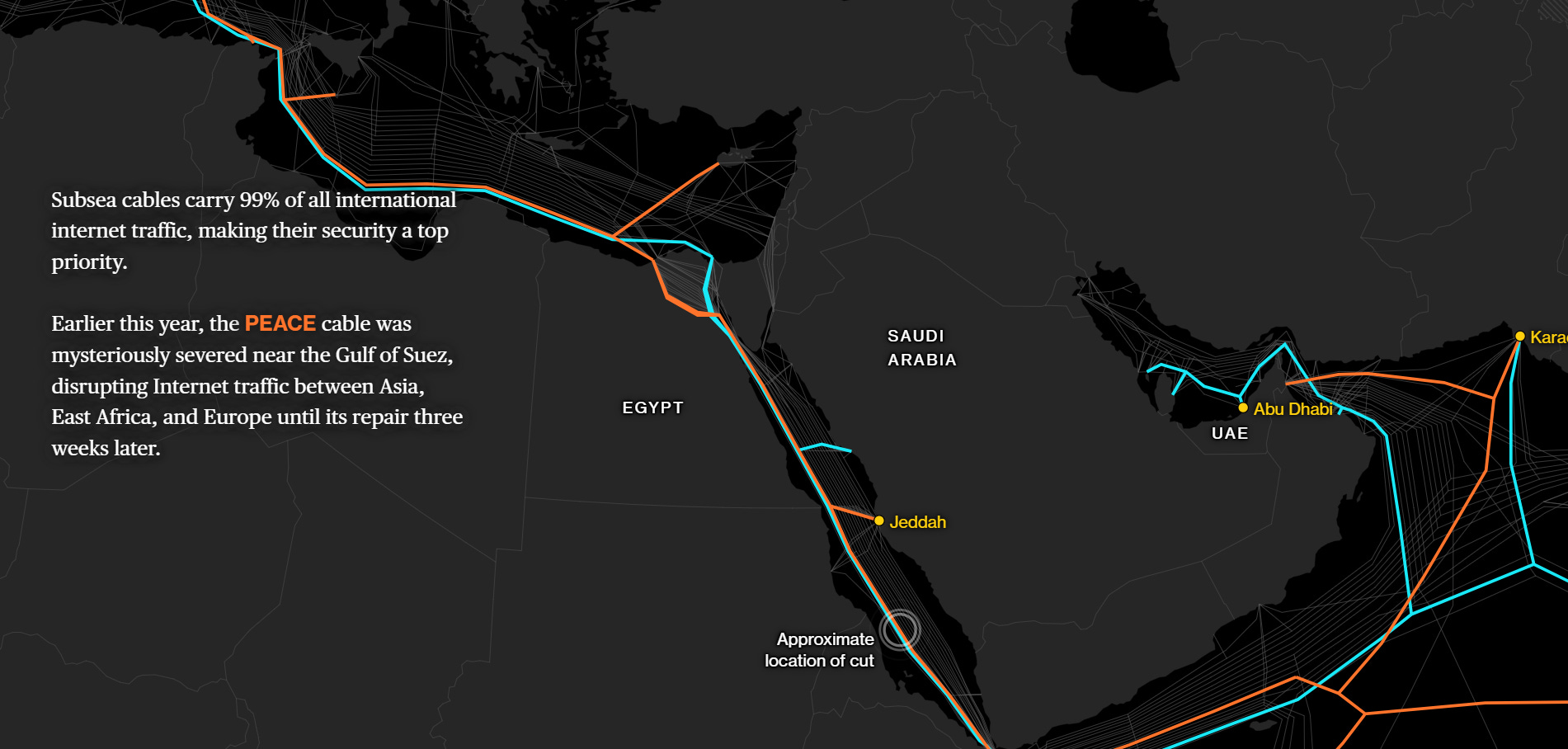
Red Sea & Suez: PEACE cable mysteriously cut, disrupting Asia–Europe traffic.
Historical & Strategic Parallel
In Kautilya’s Arthashastra, control of chokepoints — rivers, passes, forts — was key to empire. In today’s geopolitics, subsea cables are the new forts and passes.
Ports shaped the British Empire.
Pipelines shaped 20th-century energy empires.
Cables will shape 21st-century AI empires.
The battle isn’t only about speed or bandwidth — it’s about who controls the arteries through which the digital economy breathes.
Strategic Solutions / Pathways
Build National Cable Capacity
India cannot rely solely on foreign consortia. Domestic funding for Indo-Pacific routes is crucial.
Cable = National Security
Treat subsea cables like nuclear plants or air bases — protected by naval, cyber, and AI surveillance.
Diversify Routes
Avoid single chokepoints like Suez or Malacca by building multiple redundant pathways.
Democratize Bandwidth
Encourage public-private consortia with Indian tech firms to reduce reliance on US Big Tech or Chinese HMN.
Arthashastra Takeaway
Control of subsea cables = control of AI, finance, and digital sovereignty.
The US and China are building two parallel Silk Roads underwater, each bypassing the other. For India, the choice is stark:
Either remain a tenant on someone else’s empire.
Or craft a Digital Kautilya Strategy, investing in our own cables, hubs, and defenses.
Just as Mauryan India once sat at the crossroads of trade routes, modern India must sit at the crossroads of digital arteries.
👉 Question for Readers: Should India co-build neutral subsea consortia with like-minded democracies — or launch its own sovereign subsea empire to secure the Digital Silk Road?
#Arthashastra #Geopolitics #DigitalSilkRoad #SubseaCables #India #AI #USChina